
SPF 50 vs SPF 100 Sunscreen: Which Sunscreen Is Best for Indian Weather?
Sunscreen is no longer just a summer essential—it has become a year-round skincare necessity. Whether you're stepping outside for work, commuting through city traffic, or spending time near windows, your skin is constantly exposed to ultraviolet (UV) radiation.
One of the most common questions among skincare users is:
"Should I use SPF 50 or SPF 100 sunscreen?"
With countless sunscreen products available in the market, understanding SPF ratings can help you make a smarter choice for your skin. While both SPF 50 and SPF 100 provide excellent protection, they are designed for different levels of sun exposure and skin concerns.
This guide explains the differences between SPF 50 and SPF 100, their benefits, and how to choose the right sunscreen for your lifestyle.
What Is SPF?
SPF stands for Sun Protection Factor.
It measures how effectively a sunscreen protects the skin against UVB rays, which are responsible for:
Sunburn
Tanning
Skin redness
UV-induced skin damage
The higher the SPF number, the greater the UVB protection.
However, SPF ratings do not increase protection in a straight line.
Understanding UV Rays
UVB Rays
UVB rays primarily affect the skin's surface and can cause:
Sunburn
Skin irritation
Tanning
Direct UV damage
SPF ratings measure protection against UVB rays.
UVA Rays
UVA rays penetrate deeper into the skin and are responsible for:
Hyperpigmentation
Melasma
Fine lines
Wrinkles
Premature aging
Collagen breakdown
This is why dermatologists recommend choosing a sunscreen with both Broad Spectrum Protection and PA++++ UVA Defense.
SPF 50 vs SPF 100: Protection Comparison
SPF 50 Protection
SPF 50 blocks approximately 98% of UVB rays.
Benefits of SPF 50
Suitable for daily use
Ideal for office workers
Effective for moderate outdoor exposure
Helps reduce tanning
Supports pigmentation prevention
For most people, SPF 50 provides excellent daily sun protection.
SPF 100 Protection
SPF 100 blocks approximately 99% of UVB rays.
Benefits of SPF 100
Enhanced UV protection
Better support for pigmentation-prone skin
Suitable for intense sunlight exposure
Ideal for outdoor workers and travelers
Additional protection for sensitive skin
Although the percentage difference appears small, the reduction in UV exposure can be beneficial for people who spend significant time outdoors.
SPF 50 vs SPF 100 Comparison Table
Feature | SPF 50 | SPF 100 |
| UVB Protection | ~98% | ~99% |
| Daily Indoor Use | Excellent | Excellent |
| Outdoor Activities | Very Good | Excellent |
| Travel & Beach Use | Good | Excellent |
| Pigmentation-Prone Skin | Good | Better |
| High UV Index Conditions | Good | Recommended |
| Post-Treatment Care | Good | Excellent |
Which SPF Is Better for Pigmentation?
Why Does Pigmentation Occur?
Pigmentation develops when excess melanin is produced due to:
Sun exposure
Acne scars
Hormonal changes
Skin inflammation
Environmental stress
UV exposure is one of the leading triggers of pigmentation.
SPF 50 helps:
Minimize UV-induced darkening
Prevent worsening of dark spots
Support skin brightening routines
For mild pigmentation concerns, SPF 50 can be highly effective.
SPF 100 for Pigmentation
SPF 100 is often preferred for:
Melasma
Hyperpigmentation
Post-acne marks
Uneven skin tone
The extra UV protection may help reduce pigmentation triggers more effectively.
SPF 50 vs SPF 100 for Indian Climate
India experiences:
High UV exposure
Long summers
Intense sunlight
Outdoor commuting
Humid conditions
These factors increase the risk of:
Tanning
Pigmentation
Sunburn
Premature aging
People living in tropical and high-temperature regions often benefit from higher SPF protection.
Who Should Choose SPF 50?
SPF 50 is ideal for:
Office Professionals
People who spend most of their day indoors.
Students
Individuals with limited outdoor exposure.
Daily Commuters
Those exposed to sunlight for short durations.
Regular Daily Use
People seeking reliable everyday sun protection.
Who Should Choose SPF 100?
SPF 100 is recommended for:
Individuals with Melasma
Higher protection supports pigmentation management.
Outdoor Workers
People exposed to sunlight for extended hours.
Athletes
Those participating in outdoor sports and activities.
Frequent Travelers
Individuals spending prolonged periods outdoors.
Post-Treatment Skin Care
Recommended after:
Chemical peels
Laser treatments
Microneedling
Pigmentation procedures
Common Sunscreen Myths
Myth 1: SPF 100 Offers Double the Protection
Not true.
SPF 50 blocks approximately 98% of UVB rays, while SPF 100 blocks approximately 99%.
The difference is meaningful but not double.
Myth 2: Higher SPF Means No Reapplication
All sunscreens require reapplication.
Sweat, water, and environmental exposure gradually reduce effectiveness.
Myth 3: SPF Is All That Matters
A quality sunscreen should also include:
Broad Spectrum Protection
PA++++ Rating
Blue Light Protection
Skin-friendly ingredients
Myth 4: Dark Skin Doesn't Need Sunscreen
All skin tones can experience:
Pigmentation
Tanning
Sun damage
Premature aging
Daily sunscreen is essential for everyone.
How to Apply Sunscreen Correctly
Use the Two-Finger Rule
Apply sunscreen along:
Index finger
Middle finger
This amount is typically suitable for the face and neck.
Apply Before Sun Exposure
Apply sunscreen 15–20 minutes before stepping outdoors.
Reapply Regularly
Reapply:
Every 2–3 hours
After sweating
After swimming
After prolonged outdoor exposure
Consistent application is more important than choosing the highest SPF alone.
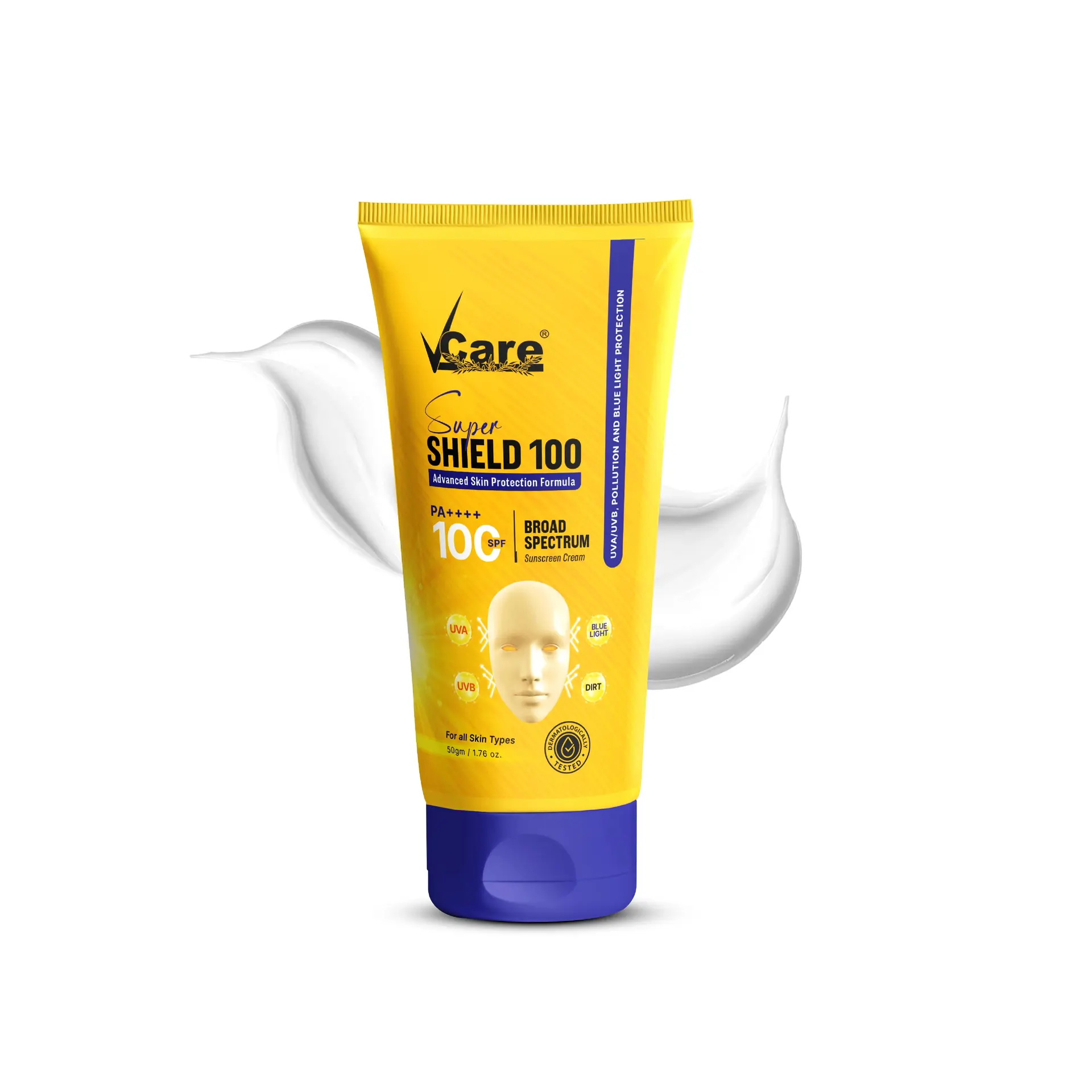
Product Spotlight: VCare Super Shield 100 Broad Spectrum Sunscreen
For advanced daily protection, VCare Super Shield 100 Broad Spectrum Sunscreen is designed to help protect the skin against multiple environmental stressors.
Key Benefits
SPF 100 Protection
Helps defend against tanning and UVB-related skin damage.
PA++++ UVA Defence
Supports protection against pigmentation and premature aging.
Broad Spectrum Protection
Protects against both UVA and UVB rays.
Blue Light Protection
Suitable for modern digital lifestyles.
Lightweight Formula
Comfortable for everyday use.
No White Cast
Blends smoothly into the skin.
Suitable for Daily Wear
Perfect for indoor and outdoor use.
Frequently Asked Questions
Is SPF 100 better than SPF 50?
SPF 100 provides slightly higher UVB protection and may be beneficial for people with pigmentation concerns or prolonged sun exposure.
Is SPF 50 enough for daily use?
Yes. SPF 50 offers excellent daily protection when applied correctly.
Can SPF 100 completely prevent tanning?
No sunscreen can completely prevent tanning, but SPF 100 significantly reduces UV exposure.
Which SPF is best for pigmentation?
Individuals with melasma and hyperpigmentation often benefit from SPF 100 combined with PA++++ protection.
What does PA++++ mean?
PA++++ indicates very high UVA protection, helping reduce pigmentation and premature aging.
Should I reapply SPF 100 sunscreen?
Yes. Regular reapplication is essential for maintaining protection.
Can I use SPF 100 every day?
Absolutely. SPF 100 sunscreen can be used daily, especially in sunny climates like India.
Conclusion
Choosing between SPF 50 and SPF 100 depends on your skin type, lifestyle, and level of sun exposure. SPF 50 is an excellent option for everyday use and moderate sun exposure, while SPF 100 provides an additional layer of protection for those dealing with pigmentation, melasma, or prolonged outdoor exposure.
While SPF value is important, consistent daily use, adequate application, timely reapplication, and broad-spectrum UVA/UVB protection remain the most critical factors in preventing pigmentation, photoaging, and cumulative sun damage.
For individuals seeking high protection daily sun care, VCare Super Shield 100 Broad Spectrum Sunscreen offers broad spectrum UVA/UVB protection in a lightweight formulation designed for everyday use. Regular sunscreen use, combined with other sun protective measures, helps support longterm skin health and pigmentation management.
Loading comments...
You Might Also Like

Aug 18, 2026 · 1 min read
Monsoon Skincare Tips for Healthy, Glowing Skin
Discover simple monsoon skincare tips to manage oily skin, humidity, tanning and pollution while keeping your skin healt...

Aug 18, 2026 · 1 min read
Bamboo Charcoal Peel Off Mask for Blackheads & Pores
Discover how bamboo charcoal peel off masks help remove blackheads, excess oil and impurities for cleaner, smoother-look...

Aug 12, 2026 · 1 min read
VCare Skin Protection Combo | Sunscreen, Soap & Facial Care
Build a simple skin care routine with VCare SPF 100 sunscreen, Goat Milk Soap and Insta Facial 3-in-1 for cleansing and ...